What Varanasi Taught Me About Life, Death, and Everything In Between
Varanasi isn’t just a city—it’s a living, breathing paradox where chaos meets calm and sorrow dances with joy. Walking its narrow lanes at dawn, I felt time warp around me. The scent of incense, the sound of chants, the sight of rituals on the ghats—everything felt ancient yet alive. This is a place that doesn’t hide life’s raw truths but embraces them. If you're seeking more than just sights, Varanasi doesn’t just show you India—it shows you humanity. It is one of the oldest continuously inhabited cities in the world, steeped in spiritual significance and layered with centuries of devotion. For travelers in search of depth, meaning, and transformation, Varanasi offers not postcard moments, but profound encounters with existence itself.
Arrival in the Sacred Chaos
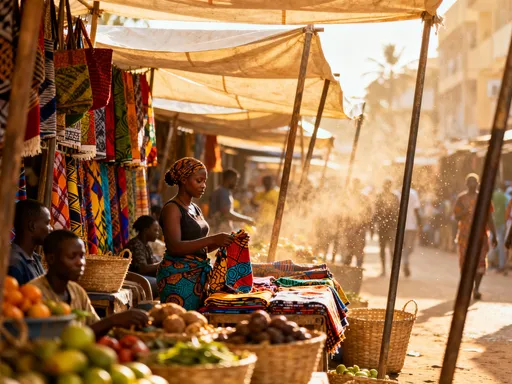
Stepping into Varanasi for the first time is like entering a different dimension—one where logic bends to rhythm, and order emerges from apparent disorder. The city greets visitors not with polished facades or wide boulevards, but with a labyrinth of narrow alleys, each pulsing with life. Cows meander through foot traffic, bicycles weave between rickshaws, and vendors call out from stalls stacked high with marigolds, brass lamps, and silk scarves. At sunrise, the air carries a mix of woodsmoke, turmeric, and river mist—a scent that clings to memory long after departure.
Unlike typical tourist destinations designed for comfort and convenience, Varanasi makes no effort to cater solely to outsiders. Its power lies precisely in this authenticity. There is no backstage; every moment unfolds in full view. Pilgrims bathe in the Ganges with quiet reverence while children splash nearby. A sadhu sits cross-legged beneath a peeling shrine, eyes closed in meditation, as a shopkeeper sweeps debris just feet away. These contrasts do not clash—they coexist, forming a tapestry of human experience both raw and real.
For many, especially women accustomed to structured routines and predictable environments, this sensory intensity can be overwhelming. Yet it is also deeply liberating. In Varanasi, life refuses to be contained or sanitized. There is beauty in the unfiltered—cracked walls adorned with vibrant murals, wrinkled hands offering prayer flowers, voices rising in unison during morning aarti. To arrive here is to accept that some places cannot be fully understood, only felt. And in that feeling, there is a kind of peace—a release from the need to control, to categorize, to make sense of everything.
The Ghats: Where Life Flows Like the Ganges
The ghats of Varanasi are more than steps leading down to the river—they are the soul of the city, where daily life and eternal beliefs converge. Stretching along the western bank of the Ganges, these stone staircases serve as stages for rituals that have unfolded for millennia. Each ghat has its own character, purpose, and rhythm, yet together they form a continuous flow of devotion, duty, and transition.
Dashashwamedh Ghat, one of the most famous, comes alive each evening with the Ganga Aarti—a synchronized fire ritual performed by robed priests. As flames rise in offering and bells chime in harmony, hundreds gather on boats and steps to witness the spectacle. The precision of the movements, the glow of oil lamps reflecting on dark water, and the swell of devotional music create a moment of collective awe. It is a powerful expression of faith, carefully choreographed yet brimming with genuine emotion.
Just a short walk away, Manikarnika Ghat presents a starker truth. Here, funeral pyres burn continuously, day and night, as families fulfill the sacred duty of cremating their loved ones on the banks of the Ganges. The smoke rises steadily, carrying with it the belief that those who are cremated here achieve moksha—liberation from the cycle of rebirth. To stand near this ghat is to confront mortality not as something distant or feared, but as an integral part of life’s journey.
What makes Varanasi unique is how seamlessly these experiences coexist. A mother washes her child’s clothes on one ghat while a priest performs last rites nearby. Students practice yoga at sunrise; by midday, mourners carry a body wrapped in saffron cloth. There is no attempt to separate joy from sorrow, birth from death. Instead, both are honored as natural, necessary, and deeply connected. For travelers, particularly women navigating roles as caregivers, nurturers, and keepers of family traditions, this integration can be profoundly moving. It reminds us that strength lies not in avoiding grief, but in acknowledging it—and continuing forward with grace.
Spiritual Energy and Personal Reflection
Varanasi has long been regarded as one of Hinduism’s holiest cities, believed to be founded by Lord Shiva himself. For centuries, pilgrims have journeyed here seeking purification, enlightenment, or a final release from earthly ties. While faith may guide many who come, even those without religious affiliation often report a palpable shift in their inner state upon arrival.
This spiritual energy does not come from grand monuments or silent retreats, but from the constant presence of practice. Sadhus with ash-smeared bodies chant mantras under banyan trees. Devotees circle ancient temples barefoot, hands pressed together in prayer. In small shrines tucked between homes, families light incense and leave offerings of milk and fruit. Spirituality here is not confined to designated hours or places—it is woven into the fabric of everyday existence.
For a thoughtful traveler, especially one accustomed to balancing family, work, and personal well-being, being surrounded by such sustained devotion can prompt quiet introspection. It raises questions not through sermons, but through observation: What gives life meaning? How do we live with intention? Can simplicity hold depth? These are not abstract philosophies, but lived realities in Varanasi.
Yet it is important to approach these experiences with humility. The city is not a performance for tourists, nor should it be treated as a spiritual theme park. Observing a ritual does not require participation, and reverence does not demand conversion. True respect means recognizing that for many, these practices are deeply personal—acts of love, duty, or surrender passed down through generations. To witness them is a privilege, not a right. And in that awareness, there is space for personal growth without appropriation.
Hidden Corners Beyond the Pilgrimage Trail
While the ghats draw the majority of attention, some of Varanasi’s most touching moments unfold off the beaten path. Just beyond the main thoroughfares, the city reveals quieter rhythms—neighborhoods where life unfolds away from cameras and guidebooks. These spaces offer a chance to see Varanasi not only as a sacred destination, but as a living home to hundreds of thousands.
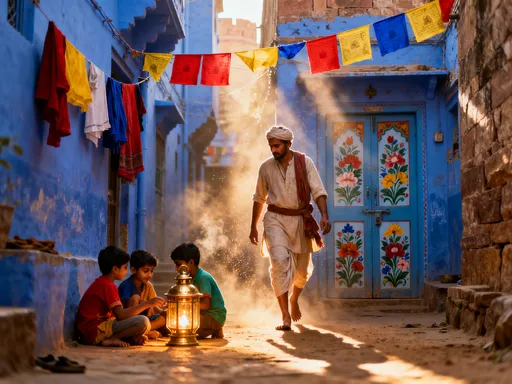
In areas like Lalita Devi or Panchganga Ghat’s side lanes, mornings begin with women sweeping courtyards, children hurrying to school in crisp uniforms, and shopkeepers unlocking wooden shutters. Small temples tucked into corners host daily pujas attended by local families. Street vendors sell fresh jalebis from brass trays, their golden coils glistening in the sun. There is a gentleness here, a sense of continuity that persists despite the city’s constant motion.
Walking these alleys invites a slower, more attentive kind of travel—one rooted in presence rather than checklist tourism. Sitting on a low stool at a neighborhood chai stall, sipping milky tea from a clay cup, often leads to conversations with locals who are curious, kind, and genuinely interested in sharing their world. These interactions, brief as they may be, foster real connection. They remind us that culture is not something to be consumed, but experienced through shared moments of humanity.
For women travelers, particularly those used to managing households and nurturing relationships, these quieter corners can feel especially resonant. The sight of a grandmother teaching her granddaughter how to arrange flowers for temple offering, or neighbors gathering to discuss the day’s news, reflects universal themes of care, continuity, and community. Exploring these spaces with respect—dressing modestly, asking permission before photographing, moving with awareness—ensures that curiosity becomes connection, not intrusion.
Food as a Gateway to Culture
No understanding of Varanasi is complete without engaging its culinary traditions. Food here is not merely sustenance—it is celebration, ritual, and connection. From pre-dawn offerings at temples to midday snacks sold on street corners, eating in Varanasi is an act embedded with meaning and memory.
The city’s street food is legendary, offering flavors that linger long after the meal ends. Malaiyo, a frothy milk-based dessert available only in winter months, is whipped by hand and topped with saffron and crushed pistachios. Served in small clay cups, it melts on the tongue like spiced cloud. Kachori sabzi, a breakfast staple, features crispy fried pastries filled with spiced lentils, served with a tangy potato curry and tamarind chutney. And then there is chai—more than a drink, it is a social ritual. Whether sipped on the ghats at sunrise or shared at a roadside stall, it brings people together in quiet communion.
Part of what makes Varanasi’s food culture so special is its accessibility. Meals are often eaten with the hands, seated on the ground or on low benches, reinforcing a sense of intimacy with both the food and the people around you. Many small eateries have no signage, operating instead on reputation and word of mouth. Locals guide visitors not with maps, but with gestures: “Yahan se turn karo”—turn here.
For women who find joy in cooking, hosting, and nurturing through food, Varanasi offers deep resonance. Watching a vendor shape dough for puri at dawn, or seeing a family share a thali meal with laughter and ease, reflects the universal language of care expressed through nourishment. Participating—by trying new dishes, learning simple phrases, or simply smiling in appreciation—opens doors to authentic exchange. It transforms travel from observation to participation, from distance to belonging.
Traveler’s Dilemma: Ethics, Respect, and Observation
Visiting Varanasi brings with it a quiet responsibility. This is not a destination of passive sightseeing, but one of active witnessing. The rituals, beliefs, and daily practices observed here are not performances for tourists—they are sacred expressions of faith and tradition. Navigating this space with integrity requires mindfulness, empathy, and restraint.
One of the most delicate aspects is photography. While capturing memories is natural, certain moments demand discretion. At Manikarnika Ghat, where families grieve and perform final rites, taking photos without consent is deeply inappropriate. Even at more public ghats, it is wise to pause and assess—would this moment feel respectful if someone photographed my loved one? A simple nod, a quiet “may I?” in basic Hindi, goes far in building trust and showing care.
Dress also matters. While Varanasi is accustomed to foreign visitors, modest clothing—covering shoulders and knees—demonstrates respect, especially when visiting temples or residential areas. Women may choose to wear scarves not as obligation, but as gesture of alignment with local norms. Behavior, too, should reflect awareness: speaking softly near prayer spaces, avoiding public displays of affection, and refraining from interrupting rituals.
Another consideration is participation. While travelers are often welcome to observe aarti ceremonies or visit temples, entering sacred spaces may require removing shoes or following specific customs. When in doubt, follow the lead of locals. And when invited—perhaps to join a family offering flowers or share a cup of tea—accept with gratitude, not entitlement.
Ultimately, ethical travel in Varanasi is not about perfection, but intention. It is about approaching the city not as a consumer of experiences, but as a guest in someone’s spiritual and emotional world. For women who often embody roles of empathy and stewardship in their own lives, this mindset comes naturally. Respecting boundaries, honoring silence, and listening more than speaking—these are not just travel tips, but reflections of a deeper way of being.
Why Varanasi Stays With You
Long after the plane has taken off and the souvenirs have been unpacked, Varanasi remains. It lingers in dreams, in quiet moments, in the way one pauses before reacting to life’s small frustrations. This is not a place that fades; it settles into the soul, reshaping perspective in subtle but lasting ways.
What stays is not just the image of fire on water or the echo of temple bells, but the feeling of being part of something vast and timeless. In Varanasi, life is not edited or softened. It is lived fully—laughing, weeping, praying, dying. To witness this is to be reminded that impermanence is not something to fear, but to accept. That joy and sorrow are not opposites, but companions. That existence, in all its complexity, is worthy of reverence.
For women who carry the weight of family, responsibility, and emotional labor, this realization can be quietly transformative. It offers a new lens through which to view aging, loss, and change—not as failures, but as natural rhythms. It encourages a deeper presence in daily life, a greater appreciation for small moments, and a softer heart toward oneself and others.
Varanasi does not offer easy answers or tidy conclusions. It does not promise happiness or enlightenment. What it offers is truth—unfiltered, unflinching, and deeply human. And in that truth, there is a kind of peace. Not the peace of escape, but the peace that comes from understanding: that to live fully is to embrace all of it—the light, the shadow, and everything in between.
To visit Varanasi is not to conquer a destination, but to open oneself to an experience. It asks not for perfection, but presence. Not for answers, but awareness. And in return, it gives a gift few places can: the chance to see life, not as a series of tasks to complete, but as a sacred journey to honor—one breath, one step, one moment at a time.