More Than a Check: Hearing Tools That Keep My Family Safe on Every Ride
Imagine this: you’re driving your kids to school, windows down, music playing softly. You call out a question, but no one answers. Not because they’re ignoring you—but because they didn’t hear you. It’s a small moment that can turn into a big worry. I’ve been there. And what I discovered wasn’t just a tool for testing hearing—it was a way to feel more connected, more aware, and more in control as a parent. This is about protecting what matters most, one commute at a time. What started as a quiet concern turned into a family habit that changed how we care for each other. Let me tell you how something as simple as a hearing check on a phone became part of our everyday safety routine.
The Moment I Realized Hearing Might Be Slipping
It was a Tuesday morning, like any other. I was driving my son to soccer practice, my daughter in the backseat scrolling through her tablet. I asked if anyone wanted to stop for smoothies after practice. Silence. I repeated the question, louder this time. My daughter looked up, startled. “Oh! I didn’t hear you,” she said, almost apologetically. That moment stuck with me. It wasn’t the first time something like this had happened. My son had been asking me to repeat things more often. I’d brush it off—kids get distracted, right? But that day, it felt different. I started paying attention. Were they really not listening? Or were they actually not hearing?
Later that week, I noticed my husband turning up the TV volume during our evening show. When I asked him about it, he said, “It’s just a little low, isn’t it?” But to me, it was already loud. That’s when it hit me—maybe it wasn’t just the kids. Maybe hearing wasn’t as sharp as I thought, for any of us. And the scariest part? No one had said a word. We were all adjusting quietly, compensating without even realizing it. That’s the thing about hearing loss—it doesn’t announce itself with a siren. It creeps in, quietly reshaping how we connect. I realized that if I didn’t start paying attention, small misunderstandings could grow into bigger gaps in communication. And as a mom, that scared me more than anything.
What I didn’t know then was that I wasn’t alone. Many families experience the same thing—small signs that get dismissed until they become harder to ignore. The car, where we spend so much time together, became the place where I noticed these changes. And surprisingly, it also became the place where I found a solution. Not with a doctor’s visit or a complicated test, but with a tool I already had in my pocket: my smartphone. That’s how my journey into hearing health began—not with fear, but with curiosity, and a simple tap on a screen.
Why Commutes Are the Perfect Moment for Health Checks
Think about it—how many hours do we spend in the car each week? School drop-offs, weekend errands, family trips to the park or grandparents’ house. The car is one of the few places where we’re all together, relatively still, and often with a few quiet minutes between destinations. It’s not just a way to get from point A to point B. It’s a shared space, a mobile living room where life happens. And because of that, it’s the perfect place to build in little moments of care.
What I love about using the car for health checks is that it doesn’t feel like a chore. No appointments, no waiting rooms, no stress. Just a few minutes during a drive when everyone’s already sitting still, maybe even wearing headphones. I started doing quick hearing checks during longer rides—on the way to a family outing or during a road trip. My kids thought it was a game at first. “Is this a quiz?” my daughter asked the first time. “Kind of,” I said. “But the prize is knowing your ears are working great.” And honestly, it worked. They were curious, engaged, and not at all nervous.
The rhythm of family life makes the car a natural fit for wellness habits. There’s a consistency to our routines—same routes, same passengers, similar noise levels. That makes it easier to notice changes over time. If my son doesn’t respond as quickly to the test one month, I can gently ask how his ears are feeling. Is he listening to music too loud? Did he go to a loud event recently? These small check-ins open up bigger conversations. And because they happen in a familiar, low-pressure setting, they don’t feel scary. They feel like part of taking care of each other.
Plus, most of us already bring our phones into the car. We use them for music, navigation, or calls. So adding a quick health tool to that mix doesn’t feel like an extra step—it feels like making better use of something we’re already doing. The car became my family’s wellness checkpoint, not because I planned it that way, but because life made it possible. And once I started, I wondered why I hadn’t thought of it sooner.
How Hearing Test Apps Actually Work (Without the Confusing Tech Talk)
When I first heard about hearing test apps, I’ll admit—I was skeptical. How could a phone possibly test something as delicate as hearing? Was it accurate? Was it safe? I imagined complicated equipment, wires, soundproof rooms. But what I discovered was surprisingly simple. These apps use your smartphone and a pair of headphones to play a series of soft tones at different pitches. You listen, and when you hear a sound, you tap the screen. That’s it. No needles, no machines, no stress.
The technology behind it is based on the same principles used in professional clinics, just adapted for everyday use. The app adjusts for background noise—so even if we’re on a quiet road or parked in the driveway, it can still give a reliable result. It starts with a tone in one ear, then the other, gradually getting softer until you can’t hear it anymore. This helps identify the quietest sounds you can detect, which is a key part of hearing health. The whole test takes about five minutes, and at the end, you get a simple chart that shows how your hearing compares to what’s typical for your age.
What I appreciate most is how user-friendly these tools are. They’re designed for people like me—parents, caregivers, busy adults who don’t have time to read technical manuals. The instructions are clear, the interface is intuitive, and the results are easy to understand. I’ve used a few different apps, and the ones I trust most are from well-known health organizations or have been reviewed by audiologists. They don’t promise miracles, and they don’t replace a full evaluation if there’s a real concern. But they do something incredibly valuable: they give you a starting point.
And the best part? My kids could do it too. There are versions designed for younger users, with fun visuals and simpler instructions. My son thought it was like a video game—“Which ear hears the beep?” he’d say, laughing. But underneath the fun, he was learning. He started to understand that hearing isn’t just about volume—it’s about clarity, focus, and paying attention to how our bodies feel. That shift—from fear to awareness—was worth more than any test result.
From Test to Talk: Starting the Conversation with Loved Ones
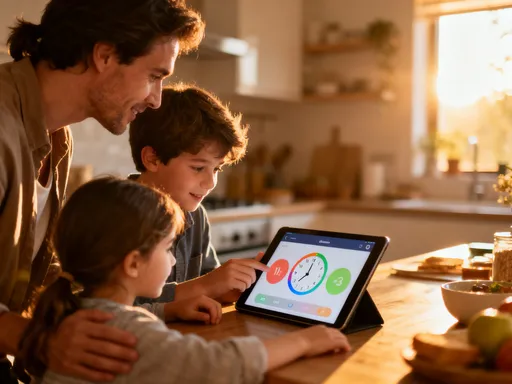
One of the most powerful moments happened after our first round of tests. I sat with my daughter in the backseat, showing her the results on my phone. “See this line?” I said. “It shows how well your ears pick up soft sounds. Yours looks great!” She beamed. But then I showed her what it might look like if hearing was harder. “If this line drops, it means some sounds are harder to hear. But the good news is, we can catch it early.” She nodded slowly. “So, like glasses for eyes, but for ears?” she asked. I smiled. “Exactly. And just like we check our eyes, we can check our ears too.”
That conversation opened the door to so much more. She started asking about earbuds, about loud music, about why I sometimes ask her to repeat things. We talked about how noise can tire out our ears, just like running tires out our legs. I didn’t lecture—I just shared what I was learning. And because we had the test results, it didn’t feel like I was scolding her. It felt like we were on the same team, looking out for each other.
With my husband, it was a little different. He’s the quiet type, not one to talk much about health unless something’s clearly wrong. But when I showed him his results—slightly weaker in the higher pitches—he paused. “Huh. I guess I have been turning up the TV,” he said. That small moment of recognition was huge. It wasn’t about blame or fear. It was about awareness. And because the data was right there, it made it easier to suggest next steps—like seeing an audiologist or being more mindful about noise exposure.
What I’ve learned is that numbers can be kinder than words. Saying, “You’ve been hard to reach lately,” might sound like criticism. But saying, “Let’s check in on our hearing together,” feels supportive. These apps didn’t just give us data—they gave us a way to care without pressure. They turned a sensitive topic into a shared activity, something we do as a family, like buckling seatbelts or packing water bottles. And in doing so, they helped us talk about health in a way that felt normal, not scary.
Protecting Little Ears in a Noisy World
Let’s face it—our kids live in a loud world. From wireless earbuds to video games with booming soundtracks, from school cafeterias to birthday parties with music blasting, their ears are constantly working. I used to think hearing damage only happened at concerts or construction sites. But the truth is, everyday noise can add up. And because kids’ ears are still developing, they’re more vulnerable to long-term effects.
What really changed my mind was seeing how often my daughter listened to music. She’d have her earbuds in for hours, even during homework. I assumed the volume was low because she wasn’t bothering anyone. But when we did the hearing test, her results showed a slight dip in the higher frequencies—the exact range affected by prolonged noise exposure. That was my wake-up call. I didn’t panic, but I did act. We talked about the 60/60 rule: listen at no more than 60% volume for no more than 60 minutes at a time. We set up automatic volume limits on her devices. And we started using noise-canceling headphones, which let her hear clearly without cranking up the sound.
The hearing tests helped us make smarter choices. Instead of guessing, we had data. When her results improved after a few weeks of lower volume, it was proof that small changes make a difference. I also started paying attention to environments—like car rides with the windows down or loud restaurants. We began using ear protection when it made sense, like at parades or fireworks. Not every time, but enough to show that protecting hearing is part of being healthy.
As a parent, I can’t control everything. But I can teach my kids to listen to their bodies and make choices that support long-term well-being. Hearing health isn’t just about avoiding loss—it’s about preserving the ability to connect, to enjoy music, to hear a whisper, a joke, a “I love you.” These tools helped me frame hearing care as an act of love, not a medical concern. And that made all the difference.
When Results Say It’s Time to Do More
Not every test result is perfect. A few months ago, my son’s scores dropped slightly. He wasn’t complaining—no ringing, no pain, no obvious signs. But the data showed a change. My first instinct was worry. What if something was wrong? What if I’d missed it? But then I remembered: this test wasn’t the end of the story. It was the beginning of one.
Instead of jumping to conclusions, I scheduled a visit with an audiologist. And you know what? Having the test results made the appointment so much easier. I wasn’t going in blind, saying, “I think something’s off.” I had real information to share. The audiologist used more detailed tools, but she said the app results were a helpful reference. In the end, it turned out my son had a minor ear infection that had gone unnoticed. Nothing serious, but worth treating. He got antibiotics, his hearing bounced back, and we were back to normal in a week.
That experience taught me the power of early detection. Because we were checking regularly, we caught it before it became a bigger issue. No missed school, no long-term impact. And emotionally, it helped too. My son didn’t feel scared because we’d already talked about hearing tests as something normal. He wasn’t being punished—he was being cared for. That sense of safety, of being looked after, mattered more than I expected.
I’ve also learned that these tools don’t replace professionals. They’re not meant to diagnose. But they are meant to empower. They give you the confidence to act, to ask questions, to seek help without feeling like you’re overreacting. And in a world where we’re all so busy, that peace of mind is priceless. Knowing when to do more isn’t about fear—it’s about love, attention, and being proactive in the quietest, most powerful ways.
Making Hearing Health a Habit, Not a Chore
Today, hearing checks are just part of our routine. We do them once a month, usually during a longer drive or a weekend trip. It’s as normal as checking the oil or packing snacks. My kids don’t dread it—they expect it. Sometimes they even ask, “Did we do our ear check yet?” And when we do, we celebrate the good results and talk about how to keep them strong.
What I love is how these small moments add up. They’ve made us more aware, more connected, and more intentional about our health. We talk about volume, about rest, about how our bodies feel. We’ve started applying that mindset to other areas—sleep, screen time, even hydration. One simple tool sparked a bigger shift in how we care for ourselves and each other.
But beyond the data and the habits, there’s something deeper. It’s the feeling of safety. Of knowing that I’m doing what I can to protect my family—not just from accidents or illness, but from the slow, silent things that can sneak up over time. Hearing is how we stay close. It’s how we share jokes, comfort each other, say “goodnight.” When that’s working well, life feels richer. And when we notice a change, we can do something about it—early, gently, together.
So if you’ve ever wondered whether your family hears as well as they used to, I’ll say this: try a test. Not because you’re worried, but because you care. Let it be a conversation starter, a moment of connection, a small act of love. Because protecting hearing isn’t just about sound. It’s about staying close, staying present, and making sure every word—every whisper, every laugh, every “I love you”—is heard clearly. And isn’t that what family is all about?